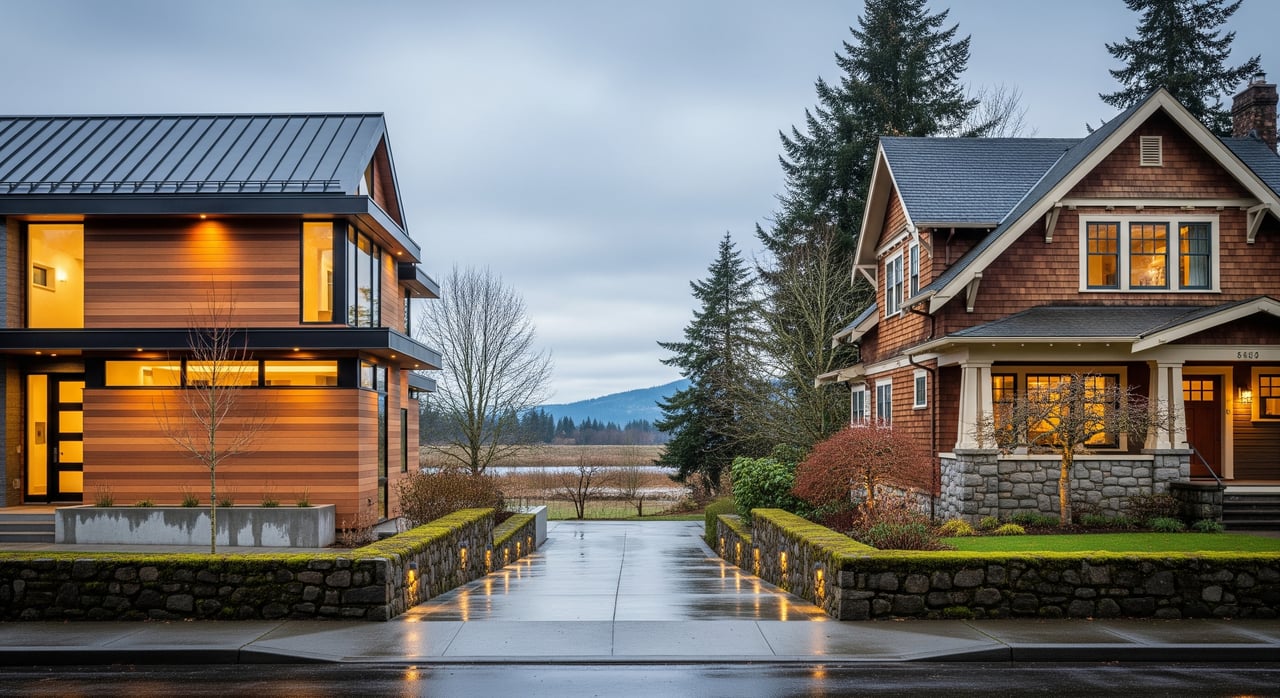
Trying to decide between a brand-new home in Ridgefield or a well-kept resale near downtown? You are not alone. The right choice depends on your budget, timing, and the lifestyle you want in this small but fast-growing Clark County city. In this guide, you’ll get a clear, local comparison of price, timelines, warranties, energy features, neighborhoods, and ongoing costs so you can choose with confidence. Let’s dive in.
Ridgefield at a glance
Ridgefield blends a historic downtown and rural surroundings with steady growth in new neighborhoods. Its location along I-5 makes it a practical base if you commute to Vancouver or the Portland metro area. Many buyers also value the small-town core and quick access to the Ridgefield National Wildlife Refuge.
Most new construction clusters at the edges of town or in designated growth areas. Established neighborhoods sit closer to downtown services and older infrastructure. As housing demand ebbs and flows, your negotiation leverage can differ between new builds and resales, and construction timelines can be affected by permitting or supply conditions.
Price and value
New construction pricing
New homes often carry a higher price per square foot because of new materials, modern layouts, and builder margins. You pay for new mechanicals and energy features, which can reduce early maintenance. Appraisals rely on comparable new-home sales and the broader market, so values can track builder inventory and local comps. Property taxes are typically set after construction, so plan for the assessed value to reflect the finished home.
Resale pricing
Resale homes can offer a lower entry price for similar square footage, especially if the market is balanced or tilting toward buyers. You may find larger lots or mature landscaping at a lower price point. Factor in near-term updates or repairs when comparing the true cost. In the right conditions, you may have more room to negotiate with individual sellers.
Timeline and certainty
New build timeline
New construction closings follow the builder’s schedule and can span weeks to many months. Weather, permitting, inspections, and supply chain constraints can create delays. Builders often require earnest money and specific deposit schedules, and their contracts use different contingencies than standard resale forms. If you need a firm move date, confirm milestones and remedies for delays before you sign.
Resale timeline
Move-in ready resales usually close on a predictable timeline if your financing and appraisal are straightforward. Typical contingencies include inspection, appraisal, and sometimes the sale of your current home. You can often align closing dates to match a relocation or school calendar. Your flexibility to negotiate timing depends on the market and the seller’s needs.
Warranties and inspections
New-home coverage
Most reputable builders provide express warranties, commonly a 1-2-10 structure that separates workmanship, systems, and structural coverage. Even new homes can have punch list items or settling, so plan independent inspections at appropriate milestones and a thorough pre-close walk-through. Ask how warranty claims are handled and the expected response times. Keep documentation for all systems, finishes, and any certification programs.
Resale due diligence
Resales do not usually come with a builder warranty, so inspection is essential. Order a general home inspection and add specific checks as needed, such as pest, roof, sewer scope, chimney, or well water tests if applicable. Review permits for major past work and ask about known issues or recent repairs. Your inspection results will guide repair requests or credits.
Customization and energy
Choices and efficiency
With new construction, you can often select floor plans, finishes, and energy systems if you buy early enough. Modern homes typically deliver tighter envelopes, better insulation, efficient HVAC, and new appliances. Some builders participate in energy certification programs, so request documentation if performance is a priority. Early selections help lock costs and avoid late change fees.
Renovation path
Resale homes offer character and mature landscaping but less immediate customization without renovation. If you plan upgrades, budget for materials, labor, and a realistic timeline. Prioritize projects that improve efficiency, like HVAC or windows, before cosmetic changes when comparing total ownership costs. Confirm whether HOA rules apply to exterior updates.
Neighborhood and amenities
Master-planned areas
New subdivisions often feature modern neighborhood design, planned parks, and consistent architectural styles. You may trade early-stage amenities for long-term benefits as the area builds out. School capacity can lag in fast-growing zones, and retail or services may take time to arrive. Most new communities have HOAs, so review rules, fees, and governance.
Established areas
Older neighborhoods offer mature trees, established community character, and proximity to downtown Ridgefield’s small but active commercial core. You may also find more immediate access to existing retail and services. Expect older infrastructure and more variety in home styles and lot sizes. Walkability can be stronger near downtown, depending on your exact location.
Financing and incentives
New build financing
Builders often offer incentives such as closing cost credits, rate buydowns, or upgrade packages. They may have preferred lenders for streamlined processing, though you can compare with your lender of choice. Appraisals can be sensitive if there are few nearby new comps, so pricing may be anchored to the builder’s own inventory and local sales. Understand all incentive conditions and how they interact with your loan program.
Resale financing
Resales typically use standard mortgage products and often have easier appraisal comparisons. Sellers may provide credits for repairs instead of price changes, depending on the market. You can sometimes negotiate a lower price or more favorable terms if the home has been on the market longer. Align your financing timeline with inspection and appraisal windows to keep closing on track.
Ongoing costs to budget
- Taxes: New construction tends to increase assessed values once improvements are recorded. Verify current rates and special levies so you understand your annual obligation.
- Insurance: Newer systems can mean lower initial premiums. Older systems in resales may cost more to insure until updated.
- Utilities and maintenance: New yards may require irrigation and establishment costs. Mature landscaping in resales can lower early effort but require regular upkeep.
- HOA: Many new subdivisions have mandatory HOAs with monthly or quarterly fees. Review what they cover, including reserves and common area maintenance.
Ridgefield lifestyle factors
Schools and logistics
The Ridgefield School District’s enrollment and capacity planning influence daily routines. New neighborhoods can drive faster enrollment growth, and early phases may rely on busing until routes and sidewalks expand. Proximity and safe walking routes are often more established in older areas. Always verify current school assignments and any planned boundary changes.
Commute and access
Ridgefield serves a commuter base tied to Vancouver and Portland, so I-5 proximity is a key factor. New developments on the outskirts may add minutes to errands if retail and services are still catching up. Consider both peak-hour travel and off-peak access for daily life. Evaluate your route to essential services, not just your workplace.
Parks and environment
Access to the Ridgefield National Wildlife Refuge and local parks is a major lifestyle draw. New subdivisions may include planned green space, but it can take years to mature. Environmental constraints like wetlands or floodplain can shape where new homes are permitted. If you are near critical areas, ask about drainage, grading, and any insurance considerations.
Community and resale outlook
Established neighborhoods often show a track record for resale and community events. New subdivisions build momentum as amenities, schools, and retail arrive and as landscaping matures. Resale prospects can depend on how many similar homes hit the market at once and how quickly the area finishes out. Look beyond today’s phase to the full build-out plan.
Quick decision guide
Choose new construction if:
- You want modern layouts, energy efficiency, and finish selections now.
- You can work with the builder’s timeline and contract terms.
- You value a planned neighborhood with future amenities and consistent design.
Choose resale if:
- You prefer a shorter, more predictable closing timeline.
- You want mature landscaping and proximity to established services.
- You plan to invest in selective updates rather than full customization.
Your Ridgefield due diligence
- Home inspection for all properties; add pest, roof, sewer, chimney, radon, or well tests as needed.
- Verify easements, setbacks, and any floodplain or wetlands designation.
- Review HOA documents, budgets, reserve studies, and meeting minutes when applicable.
- Confirm school assignments and ask about any planned construction or boundary shifts.
- For new homes: request the builder’s timeline, grading and drainage plan, and all warranty documents.
Key questions to ask
For builders
- What is the earnest money and deposit schedule, and which contingencies are allowed?
- What warranties are included, who services them locally, and how are claims handled?
- What is the estimated completion date, and what remedies apply if there are delays?
- Which upgrades are standard versus optional, and what are the deadlines and costs?
- What are the HOA rules, fees, reserves, and when will the HOA be owner-governed?
- What energy features and mechanical systems are included, and is there documentation?
- Which utilities, sidewalks, landscaping, and street lighting will be complete at closing?
For sellers
- How old are the roof, HVAC, water heater, and sewer line, and have they been replaced?
- Are there known issues or recent major repairs, and are permits available for past work?
- What recent comparable sales support the price, and how long do homes sit on market nearby?
- Which appliances, fixtures, and window coverings are included in the sale?
- Can you provide utility and maintenance cost history?
Hidden costs buyers miss
- New construction: window coverings, refrigerator and washer/dryer if not included, fencing and gates, backyard landscaping and irrigation, additional hardscape, and after-market screens or storm doors.
- Resale: system updates for efficiency, sewer or drainage fixes, roof or siding maintenance, tree work, and bringing older electrical or plumbing to current standards.
How Rebecca Lee Real Estate helps
You deserve clear guidance and strong advocacy whether you choose a new build or a resale. We help you compare floor plans and lots, evaluate HOA rules, and negotiate builder incentives or seller credits. Our team coordinates inspections, reviews contracts and warranties, and maps your timeline to your move.
If you are weighing neighborhoods across Ridgefield and the Portland–Vancouver corridor, we bring deep local knowledge, developer-side experience, and polished, concierge-level service to every transaction. Ready to talk strategy and next steps? Connect with Rebecca Lee for a focused plan that fits your goals.
FAQs
Which is best for immediate move-in in Ridgefield?
- A move-in ready resale usually offers the shortest, most predictable closing timeline compared with a new build that follows a construction schedule.
How do builder incentives work for new homes?
- Builders may offer closing cost credits, rate buydowns, or upgrade packages that vary with market conditions, and terms often favor using a preferred lender.
How do property taxes differ on new construction?
- New homes are assessed after completion, so the property tax reflects the finished improvement, while resales already have an established assessed value.
What inspections are essential in Ridgefield?
- Get a general inspection and add pest, roof, and sewer scope as needed, and for new homes include milestone checks, a pre-close walk-through, and warranty documentation.
What affects resale prospects in new subdivisions?
- Resale timing can depend on amenity build-out, school capacity, nearby retail growth, and how many similar homes enter the market at once.