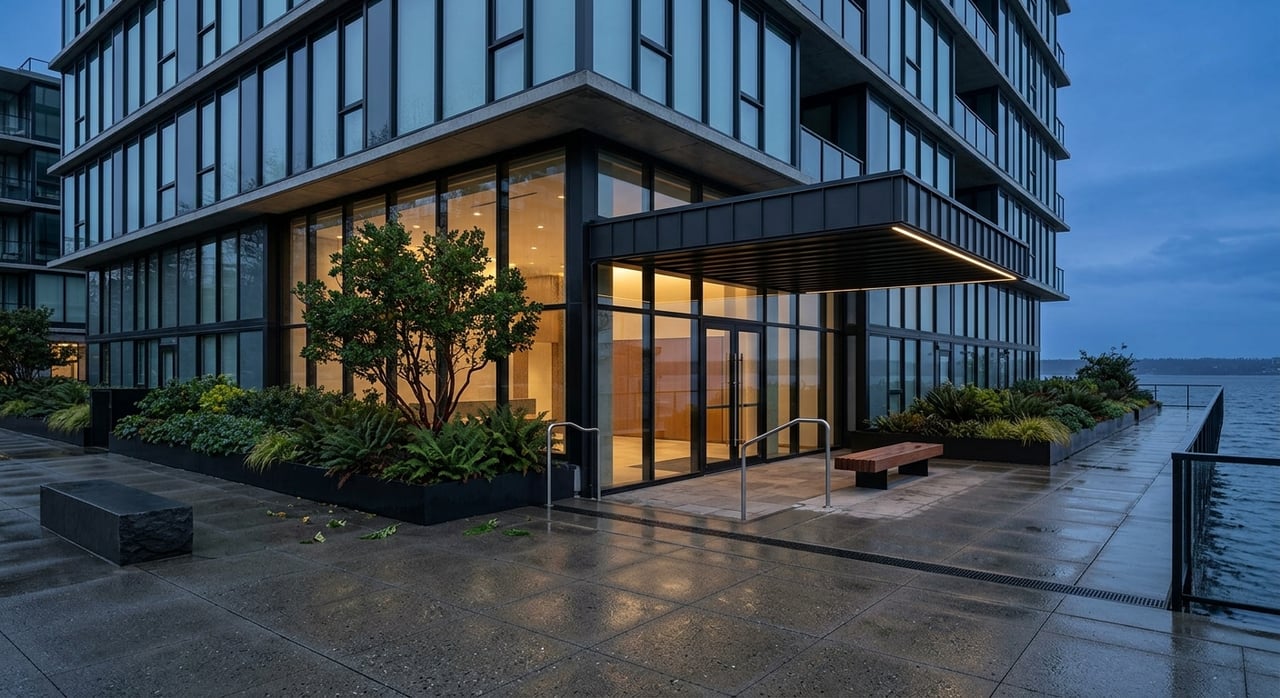
If you are planning or watching a new condo launch in Vancouver, the waterfront is where the conversation gets interesting. This is not just another downtown housing story. It is a location shaped by river access, public spaces, mixed-use growth, and evolving buyer demand, which can all influence how a project is positioned from day one. In this guide, you will get a clear look at what makes a Vancouver waterfront condo project different, what market conditions support a launch, and why the details behind timing, messaging, and approvals matter. Let’s dive in.
Why Vancouver’s waterfront stands out
A Vancouver waterfront condo project enters a setting with a stronger identity than a standard urban infill site. According to the City of Vancouver’s waterfront development overview, the broader waterfront effort reconnects 35 acres along the Columbia River to the historic core and could add up to 3,300 residential units along with office space and park land. That scale matters because it creates a real district, not just a single building.
For buyers, the difference is easy to understand. The value is tied not only to the residence itself, but also to the public realm around it. The waterfront experience includes a riverfront setting, walkable streets, open space, and a mixed-use environment that supports daily life without feeling isolated.
What gives the location its appeal
The amenity mix is one of the biggest reasons a waterfront condo launch can attract attention early. Vancouver Waterfront Park includes 7.3 acres of public park space, the Grant Street Pier, a Columbia River water feature, and access to the 5-mile Columbia River Renaissance Trail. Those features help create a lifestyle story that is hard to replicate in a traditional downtown condo setting.
It is also important to understand that the waterfront is made up of linked but distinct districts. The city notes that Terminal 1 is a separate waterfront district with mixed commercial, residential, and civic uses, future public market and dock plans, and lower-dock day use access. The Port also makes clear that Terminal 1 is not the same as the private Vancouver Waterfront, which matters when describing location and project context accurately.
Nearby, Waterfront Gateway adds another layer of momentum. This city-led district spans 6.4 acres and includes roughly 420 planned multifamily units, about 100 affordable units, ground-floor retail intended for local businesses, and a parcel under construction with completion targeted for Q1 2027. For a launch team or a buyer tracking new inventory, that signals continued investment around the riverfront.
Why timing looks favorable
A launch works best when it meets a real market need, and Vancouver has clear housing demand behind it. The city reports that Vancouver needs 43,198 new housing units through 2045, and that 79% of new unit construction over the last three years has been multifamily. That is meaningful for any condo project because it shows that higher-density housing remains part of the city’s growth pattern and policy direction.
Current pricing and inventory also support a measured sense of opportunity. Redfin’s Vancouver market data reported a median sale price of $482,575 in February 2026 and a median time on market of 25 days. At the county level, NWMLS reported 4.60 months of condo inventory in Clark County in February 2026, which sits near the association’s 4-to-6-month balanced market benchmark.
That combination suggests a market that is active, but not flooded. For a waterfront condo launch, that can create room for thoughtful pricing, phased releases, and buyer education without the pressure of entering an oversupplied segment.
Who a waterfront condo launch can reach
Vancouver’s population profile points to a broad buyer pool. The City of Vancouver reports 205,100 residents, a median age of 40.2, 47.6% renters, and median household income of $82,928. Clark County reports 542,400 residents, a median age of 39, and median household income of $97,678.
For a condo project, that can translate into several potential audiences. You may see interest from downsizers who want less maintenance, move-up buyers looking for a more elevated location, and renter households who want to move into ownership in a high-amenity setting. The waterfront’s draw is that it can appeal to different life stages while still offering a clear identity.
Why public access shapes the launch story
On Vancouver’s shoreline, public access is not just a design theme. It is part of the approval framework. The city’s Shoreline Master Program says required public access must be fully developed and available for public use at the time of occupancy, connected to a barrier-free route, and supported by recorded access easements and signage.
That has a direct impact on how a waterfront condo project should be presented. Buyers are not only evaluating views, floor plans, and finishes. They are also buying into a connected public setting where access to the shoreline is part of the broader value proposition.
This is one reason Vancouver waterfront messaging tends to work best when it connects architecture, place, and access. The city’s earlier City Center Vision plan also envisioned mid-rise condos in the waterfront area and emphasized public access to the river shoreline. That long-range planning backdrop helps explain why the strongest launch narratives are place-based rather than purely unit-based.
What presales can look like in Washington
If you are tracking a new condo project before completion, it is helpful to know that presales are allowed in Washington, but they come with clear rules. Under the state’s Condominium Act, a public offering statement is required for condominium sales. The law also allows a contract of sale to be signed before completion.
At the same time, no ownership interest may be conveyed until the condominium declaration and survey map or plans are recorded and the unit is substantially completed and available for occupancy, unless the parties specifically agree otherwise in writing. For buyers, that means early reservation or contract opportunities may be part of the launch process, but the legal path to closing follows a structured timeline.
For developers and project teams, that makes disclosure quality and launch sequencing especially important. The consumer-facing story has to be polished, but the documentation side has to be just as disciplined.
Why pricing and release strategy matter
In a project like this, the first few weeks of a launch can shape market perception for months. Because Vancouver still needs a large volume of new housing and condo inventory is not heavily overbuilt, a strong launch will usually benefit from early price architecture and clear floor or view differentiation. That is a reasonable conclusion based on the city’s housing need, multifamily growth pattern, current inventory levels, and Washington’s presale structure.
In practical terms, that means not every unit should be introduced the same way. River exposure, park adjacency, orientation, and layout can all influence how buyers respond. A thoughtful release sequence can help a project establish value, test demand, and protect pricing logic as the campaign expands.
The local data stream also matters after launch. Because NWMLS county recaps track new listings, active inventory, pending sales, closed sales, median price, and months of inventory, they can provide useful signals as a project moves through early absorption.
Are there local incentives to watch?
Yes, and they may play a role in project feasibility depending on the development path. The city’s Multi-Family Tax Exemption program includes a Downtown Waterfront target area. Approved projects can receive an 8-year or 12-year property tax exemption depending on the program path.
Not every condo project will follow the same structure, and eligibility depends on the program requirements. Still, the presence of a waterfront target area reinforces the larger point that this location remains part of the city’s housing and investment strategy.
What buyers should watch in a new launch
If you are considering a waterfront condo early in the release cycle, it helps to focus on a few key questions:
- How does the building connect to the surrounding waterfront district?
- What public access features and pedestrian connections are part of the completed experience?
- Which residences have meaningful differences in view, orientation, or layout?
- What is the timeline for completion, recording, and occupancy?
- What disclosures are included in the public offering statement?
Those questions can help you move past glossy marketing and evaluate the real long-term appeal of the opportunity.
Why local launch guidance matters
A waterfront condo project is never only about the building. It is also about market timing, district identity, pricing structure, disclosure management, and how the public realm shapes buyer demand. In Vancouver, those factors are especially connected because the waterfront is still growing as a larger mixed-use destination.
That is where experienced representation can make a real difference. Whether you are a buyer evaluating an early opportunity or a developer planning a launch strategy, success usually comes from aligning the product story with the realities of the market, the location, and the transaction process.
If you are exploring a Vancouver waterfront condo opportunity and want a more strategic view of pricing, positioning, or launch readiness, connect with Rebecca Lee. You will get boutique guidance backed by developer-launch experience, high-touch marketing, and local waterfront insight.
FAQs
What makes a Vancouver waterfront condo different from a standard downtown condo?
- A Vancouver waterfront condo is shaped by the Columbia River setting, access to Vancouver Waterfront Park, the Columbia River Renaissance Trail, and the surrounding mixed-use waterfront districts rather than just a downtown address.
Can a Vancouver condo project be marketed before construction is finished?
- Yes. Washington law allows a contract of sale before completion, but a public offering statement is required and ownership cannot be conveyed until legal recording and substantial completion requirements are met, unless otherwise agreed in writing.
Why does public access matter for a Vancouver waterfront condo project?
- Public access matters because shoreline rules require it in many cases, and the connected public realm is also a major part of what gives the waterfront its lifestyle appeal.
Are there incentives for multifamily development in Vancouver’s Downtown Waterfront?
- Yes. The City of Vancouver’s MFTE program identifies Downtown Waterfront as a target area, with approved projects potentially qualifying for an 8-year or 12-year property tax exemption depending on the program path.
Is the Vancouver waterfront still growing as a residential area?
- Yes. City planning documents show continued housing need, additional multifamily development, and ongoing investment across waterfront-linked districts such as the main waterfront development area and Waterfront Gateway.