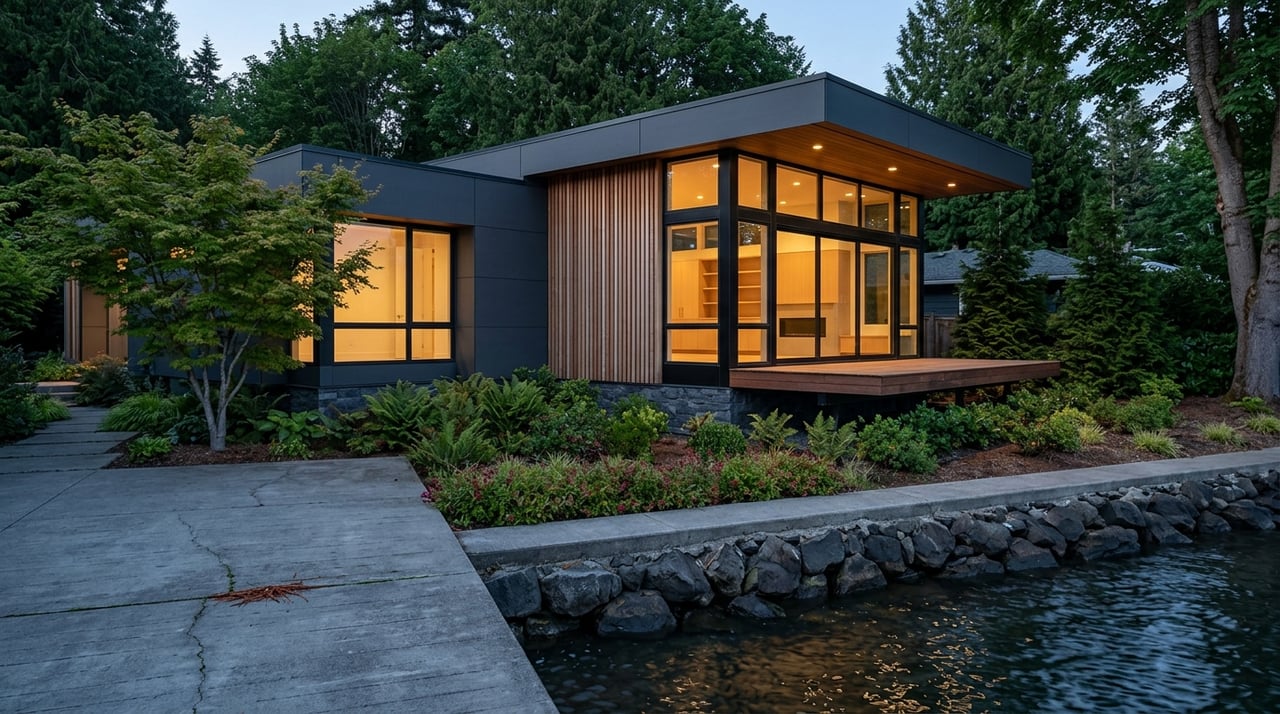
If you are deciding between a Lake Oswego waterfront home and a view home, you are really choosing between two different ways to live. Both can be beautiful, both can hold strong appeal, and both can sit well above the city’s broader price trends. The right fit depends on how you want to use the property day to day, what level of upkeep you are comfortable with, and how important direct lake access is to your long-term goals. Let’s dive in.
Lake Oswego homes start with lifestyle
In April 2026, Lake Oswego’s overall median sale price was $898,536. Waterfront and lake-view homes typically sit above that broader city-level median once you move into luxury inventory.
Current listing snapshots also show a meaningful difference in availability. Zillow search results showed 48 waterfront homes and 167 lake-view homes, which suggests view inventory is much broader while waterfront remains the scarcer option.
That scarcity shows up in pricing. Recent waterfront examples included listings around $4.795 million to $5.995 million, while lake-view homes ranged from about $895,000 to $6.5 million. The ranges overlap, but waterfront appears more consistently concentrated at the estate level.
Waterfront homes offer direct lake use
If you want your home to support boating, swimming, dock access, or a true lakeside routine, waterfront is the category that delivers that experience most directly. For many buyers, that daily-use factor is the whole point.
A waterfront address can offer a strong lifestyle story and a strong resale story when the property has true lake-facing orientation. In practical terms, you are not just buying scenery. You are buying access, proximity, and the ability to step into lake use without planning your whole day around it.
Waterfront access is not automatic
One of the most important details in Lake Oswego is that lake access privileges are based on historical deeded easements. According to Lake Oswego Corporation, those rights cannot be sold, purchased, or transferred.
That means you should verify access early in the buying process. A home near the lake or even on the lake does not automatically mean you have the exact access rights you expect.
Waterfront ownership comes with more rules
Lake Oswego Corporation requires a Facility Permit for waterfront construction, installation, or modification on Corporation property, the lakebed, and adjacent waterfront areas. Unauthorized work can lead to removal, restoration requirements, and fines.
Those rules matter if you are thinking about changing a dock, adding a boat lift, improving shoreline features, or making exterior updates near the water. Waterfront ownership can be deeply rewarding, but it is also more process-heavy than a standard home improvement path.
What can be built over the water
Local rules are specific about what may extend beyond the shoreline. Docks, boathouses, and boat lifts may be allowed, but infill is prohibited.
There are also design and use limits. Boathouses are capped at 500 square feet, are not guaranteed for every lot, and cannot include habitable rooms or overnight accommodations.
Shoreline work needs careful planning
Waterfront changes often involve more than a contractor and a design plan. Lake Oswego Corporation notes that barges, workboats, and lakebed construction equipment require prior approval and insurance, while tree removal and new lighting on Corporation property have their own review process.
For you as a buyer, this means future projects may take more time, more coordination, and more diligence than they would on a hilltop or interior view property. If you love a hands-on lake lifestyle, that may be worth it. If you want simpler ownership, it is a real factor to weigh.
View homes offer beauty with less complexity
A Lake Oswego view home can give you water outlooks, elevated perspectives, and a luxury feel without many of the operational demands that come with shoreline ownership. That makes this category appealing if you want visual impact more than active waterfront use.
View homes also give you a wider field of options. With more inventory available, you may have more flexibility in price, architecture, lot position, privacy, and renovation potential.
View homes often mean easier upkeep
A hilltop or view home does not typically carry the same shoreline permitting burden as a waterfront parcel. You may still have property-specific issues to review, but you are generally not dealing with docks, lakebed improvements, or over-water structures.
That can make ownership feel more straightforward. If your goal is to enjoy the setting without taking on extra lake-related approvals and maintenance, a view home can be the more comfortable match.
Not every water view is equally durable
This is one of the biggest distinctions buyers should understand. Lake Oswego Corporation’s view-protection guidelines preserve direct outward views from primary living areas, but views across adjacent private property or down the shoreline are not protected.
In simple terms, a true lake-facing view may offer a stronger long-term outlook than a partial glimpse or angled sightline. If view value is central to your decision, ask detailed questions about what is direct, what is protected, and what could change over time.
Privacy and daily rhythm matter
The waterfront versus view decision is not just about price. It is also about how you want your home to feel on an ordinary Tuesday.
A waterfront home may bring more activity, more equipment, and more connection to boating and shoreline use. A view home may deliver a quieter rhythm with more separation from the daily mechanics of lake access.
Neither option is universally better. The better choice is the one that fits your habits, your tolerance for upkeep, and the kind of luxury experience you actually want to maintain.
Lake use rules can shape your decision
If direct access is a priority, you should know the rules that affect daily enjoyment. The City of Lake Oswego says the state, county, city, and Lake Corporation each have distinct roles in safety, law enforcement, water quality, and maintenance.
That layered oversight matters because your waterfront experience is shaped not just by your property, but also by operating rules on the lake itself. Knowing those rules early can help you avoid surprises.
Boating and paddling have local limits
Oregon State Marine Board rules limit boat speed to 6 MPH within 100 feet of shore, swimmers, canoes, or buoy-marked areas on Lake Oswego. Paddleboards may not go more than 100 feet from shore or under any bridge, and towing watersports face added restrictions in certain bays and canals.
Paddlecraft users must also carry a Waterway Access Permit and basic safety gear, including a life jacket, a sound device, and a white light for reduced visibility. If your dream is active lake recreation, these details matter as much as the home itself.
Water conditions can affect enjoyment
Oswego Lake has had recent harmful algal bloom advisories. When blooms are present, authorities advise avoiding swimming and high-speed boating in affected areas, and pet exposure can also be a concern.
That does not mean waterfront living loses its value. It does mean your water use can be seasonal and condition-dependent, so it is smart to think about your lifestyle beyond ideal summer days.
How to choose between waterfront and view
If you are narrowing your options, focus on how you will use the property most often, not just how it looks during a showing. The clearest choice usually comes from matching your lifestyle to the ownership reality.
Choose waterfront if you want
- Direct day-to-day lake access
- Dock, boat, or lift potential
- A signature waterfront lifestyle
- Strong value in true lake-facing orientation
- A property that supports boating or swimming routines
Choose a view home if you want
- Water outlooks without shoreline complexity
- Simpler upkeep and fewer lake-related project approvals
- A broader selection of homes and price points
- More emphasis on privacy and elevation
- Luxury appeal centered on scenery rather than access
Smart questions to ask before you buy
Whether you are leaning toward waterfront or view, a few questions can quickly clarify the opportunity.
- Does the property have deeded lake access?
- Can a dock, boathouse, or lift plan be approved for this lot?
- Is the view direct and protected from primary living areas?
- Which lake rules apply to this specific bay or canal?
- Have there been recent algae advisories that affect this area?
- Are there shoreline maintenance or review issues to plan for?
These questions can help you compare two beautiful homes in a more practical way. They also help you buy with fewer assumptions and better long-term confidence.
The best choice depends on your priorities
In Lake Oswego, waterfront homes and view homes both offer prestige, beauty, and strong lifestyle appeal, but they solve for different priorities. Waterfront is often the better fit if direct access and daily lake use are central to your vision. View homes usually make more sense if you want visual impact, privacy, and a more straightforward ownership experience.
If you want help evaluating access rights, view durability, pricing position, and the real tradeoffs between these property types, working with a broker who understands luxury and waterfront nuance can make the process much clearer. For tailored guidance on Lake Oswego luxury homes, connect with Rebecca Lee.
FAQs
What is the main difference between a Lake Oswego waterfront home and a view home?
- A waterfront home is centered on direct lake access and shoreline use, while a view home is centered on water outlooks without necessarily offering the same access or lake-use features.
What should you verify about Lake Oswego lake access before buying?
- You should verify whether the property has historical deeded easement rights, since Lake Oswego Corporation states that lake access privileges cannot be sold, purchased, or transferred.
What permits matter for Lake Oswego waterfront homes?
- Waterfront construction, installation, or modification on Corporation property, the lakebed, and adjacent waterfront areas may require a Facility Permit from Lake Oswego Corporation.
What can you build over the water at a Lake Oswego waterfront property?
- Local rules allow certain structures such as docks, boathouses, and boat lifts beyond the shoreline, but infill is prohibited and boathouses have size and use limits.
Are Lake Oswego view homes easier to maintain than waterfront homes?
- In many cases, yes, because view homes generally do not involve the same shoreline structures, lakebed work, and lake-related approval processes that waterfront properties can require.
Are Lake Oswego water views protected over time?
- Some direct outward views from primary living areas may be protected under Lake Oswego Corporation guidelines, but views across adjacent private property or down the shoreline are not protected.
What boating rules apply on Lake Oswego for waterfront homeowners?
- State rules include a 6 MPH speed limit within 100 feet of shore, swimmers, canoes, or buoy-marked areas, along with additional restrictions for paddleboards and towing activities in certain areas.
Can water quality advisories affect Lake Oswego waterfront living?
- Yes, harmful algal bloom advisories can affect swimming, boating conditions, and pet safety in affected areas, so water use may vary by season and current conditions.